In this article
Where can cell culture contamination come from?
Potential sources include incoming cell cultures, media and reagents, consumables, shared equipment and laboratory personnel. Finding the source of a particular incident requires evidence: review what affected cultures shared, when the problem appeared and what testing found. Repeated contamination should prompt a coordinated investigation rather than an assumption that the room alone is responsible.
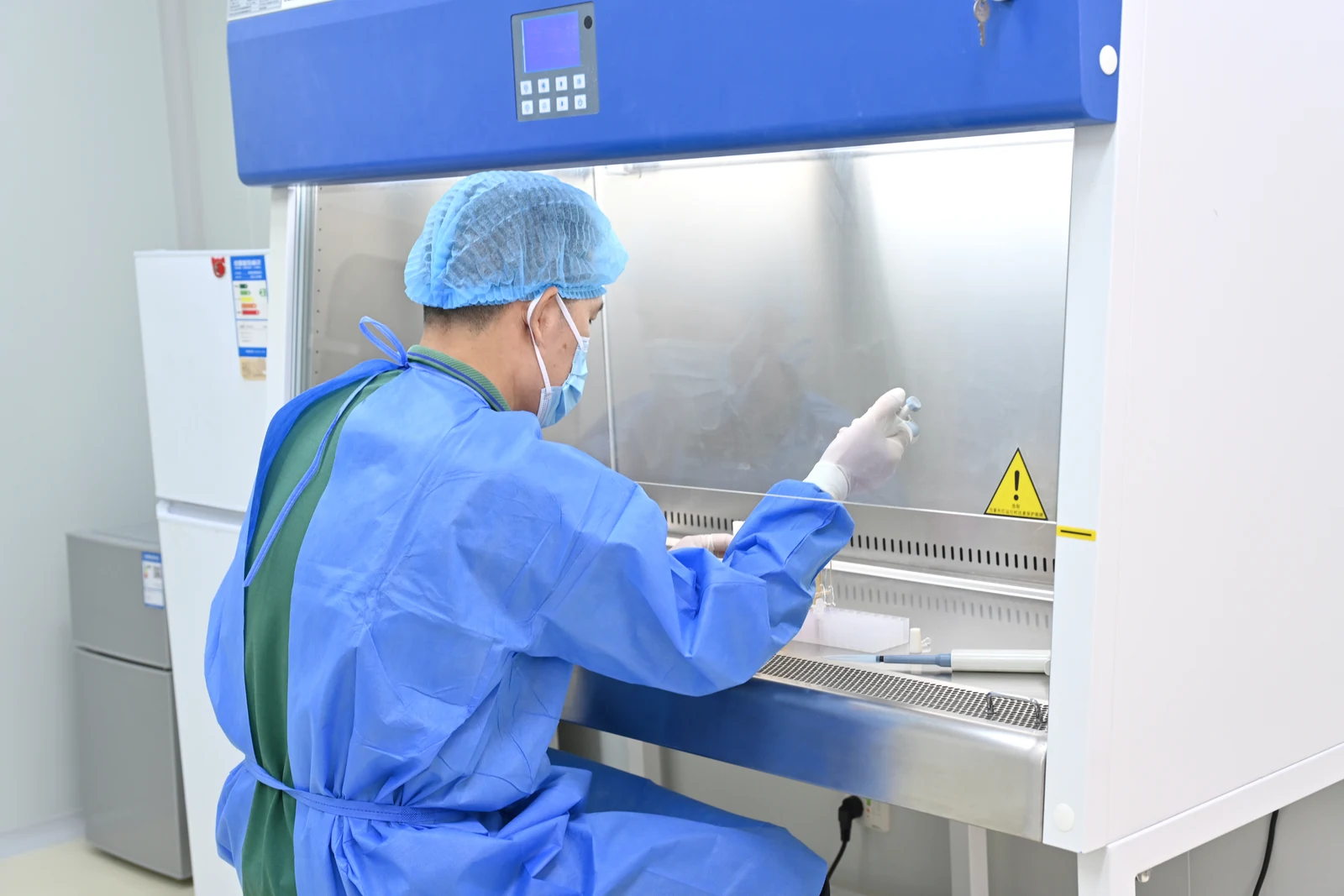
Which potential sources should be reviewed?
ATCC identifies cell lines, reagents, supplies, equipment and personnel as potential contamination sources. A practical review can group the available records as follows:
- Cells and materials: incoming cell lines, shared media or reagent batches, and associated quality records.
- Personnel and workflow: shared handling steps, work areas and the sequence of activities.
- Equipment and environment: shared cabinets and incubators, equipment condition, maintenance history and available environmental findings.
These are investigation categories, not proof of causation. A positive result in a room or on equipment does not by itself establish where contamination began or the direction of transfer. Read ATCC’s source overview.
Why can contamination recur after cleaning?
Recurrence raises questions about whether the original source, a transfer route or a repeated introduction has been addressed. Comparing affected and unaffected work, incident dates and previous corrective actions can help frame the investigation. The explanation must be established for the individual facility; recurrence alone does not identify a specific organism or source.
Can cultures look normal and still contain mycoplasma?
Yes. Mycoplasma contamination may lack obvious visual signs, so appearance alone cannot demonstrate that a culture is free of contamination. ATCC describes testing as an important part of mycoplasma control and explains why routine antibiotics do not provide reliable protection. Read ATCC’s mycoplasma guidance.
Related article: Mycoplasma Contamination in Cell Culture →
What information helps a contamination investigation?
For an initial discussion, assemble the incident timeline, available organism identification or test results, affected rooms and equipment, relevant material records, and previous corrective actions. Include the laboratory’s operating constraints so the investigation scope can be discussed in context.
The aim is to connect on-site observations with laboratory findings, assess potential sources and transmission routes, and provide a basis for targeted corrective action. Project-specific sampling and testing requirements depend on the facility and the question being investigated.
How can VanTsteri support contamination control?
VanTsteri provides microbial contamination investigation and equipment supply and remote decontamination support, with any on-site engineering scope agreed for the project. The service scope is planned around the facility, available findings and project requirements. Investigation and environmental treatment serve related purposes: treating an area does not itself establish the original contamination source.
Explore contamination investigation →
Discuss on-site decontamination support →
Additional system review
VanTsteri’s source discussion considers ventilation, personnel and equipment together, including condensate, ductwork, biosafety cabinets and incubators. Findings in these locations are investigation leads, not proof of a single transmission route.
Sources and further reading
- ATCC: Biocontainment and Safety — potential contamination sources.
- ATCC: Mycoplasma Contamination — detection considerations and antibiotic limitations.
- Original VanTsteri article — the company article from which this overview was developed.