TECHNICAL SERVICE APPLICATION
Recurring Phage Contamination: Closing the Gaps
A dedicated approach to investigation, targeted response and outcome review.
When contamination keeps returning
For businesses using E. coli in industrial production, bacteriophage contamination can disrupt process stability, affect batch quality and lead to production losses, shutdowns or delayed deliveries. When the problem recurs, the priority is to understand the evidence and identify risks that an earlier response may have overlooked.
This technical service application describes VanTsteri’s approach to contamination investigation and environmental risk management. It is not an account of a single verified customer project.
Reducing the risk of missed contamination
A response can fall short when relevant contamination areas are missed. Unaddressed areas may contribute to renewed contamination, even after other parts of the facility have been treated.
Drawing on repeated on-site experience, VanTsteri has developed a dedicated approach that brings systematic investigation, targeted treatment and follow-up review together. The aim is to reduce omissions and support the return to production. The proprietary process is not disclosed here.
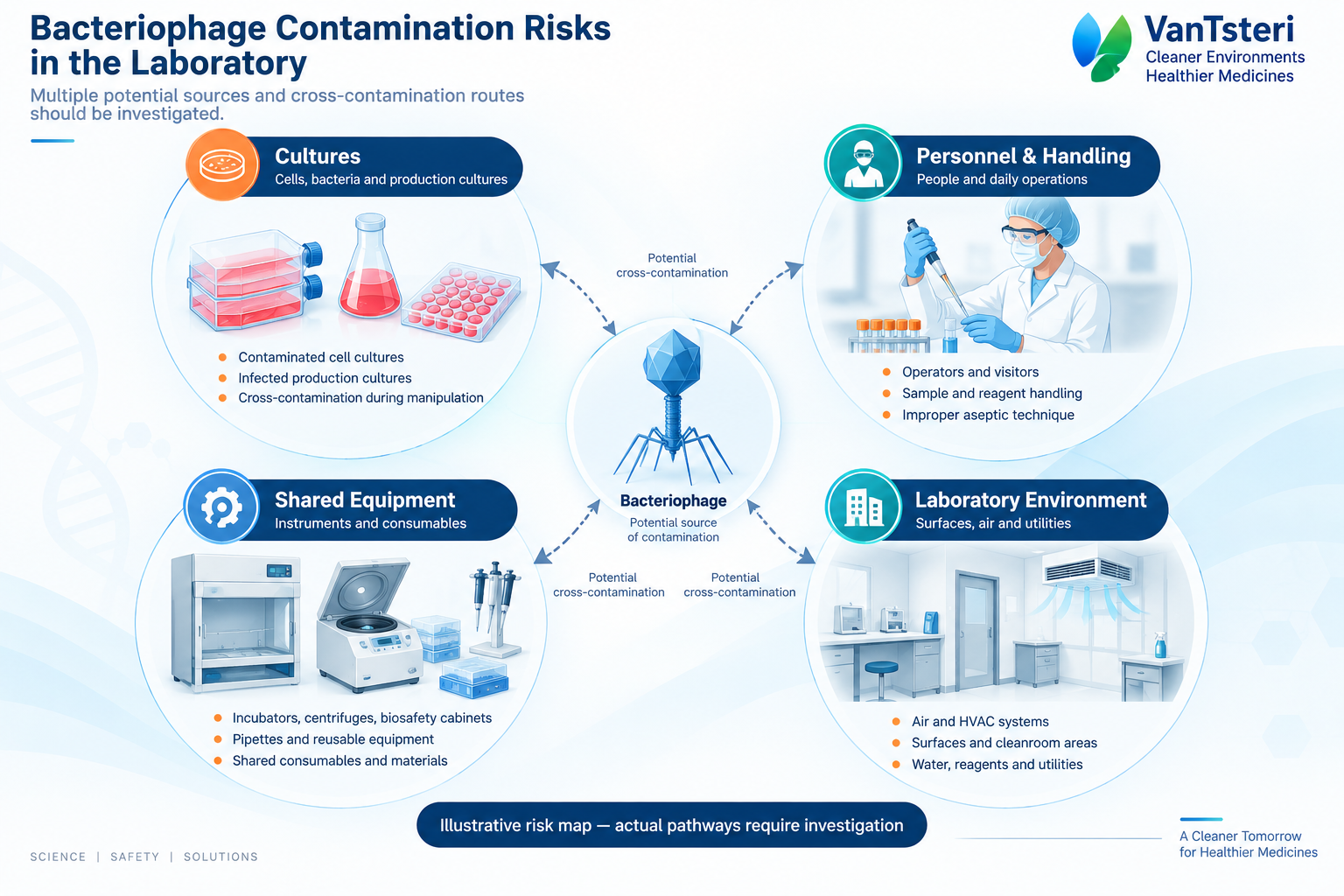
Reduce overlooked risks
- Potential pathways
- Consider several areas together
- Investigation
- Compare findings with site evidence
- Targeted response
- Address risks that may have been missed
Building an investigation from several lines of evidence
Investigation considers the timing of abnormalities, production records, available test findings and the site’s operating conditions. Equipment, pipework, the surrounding environment and related management practices are assessed together.
Findings need to be considered in context and compared with other evidence. A single positive result does not, by itself, establish the source of contamination or explain every recurrence.
Connecting findings with a targeted response
VanTsteri helps customers assess cleaning and decontamination needs for the environment and equipment, alongside relevant maintenance and management improvements. The response should address the identified risks and reflect the site’s actual conditions.
Investigation, treatment and outcome review form a connected service. This helps customers make clearer quality decisions and assess readiness to resume production, while reducing the risk that relevant areas remain unaddressed.
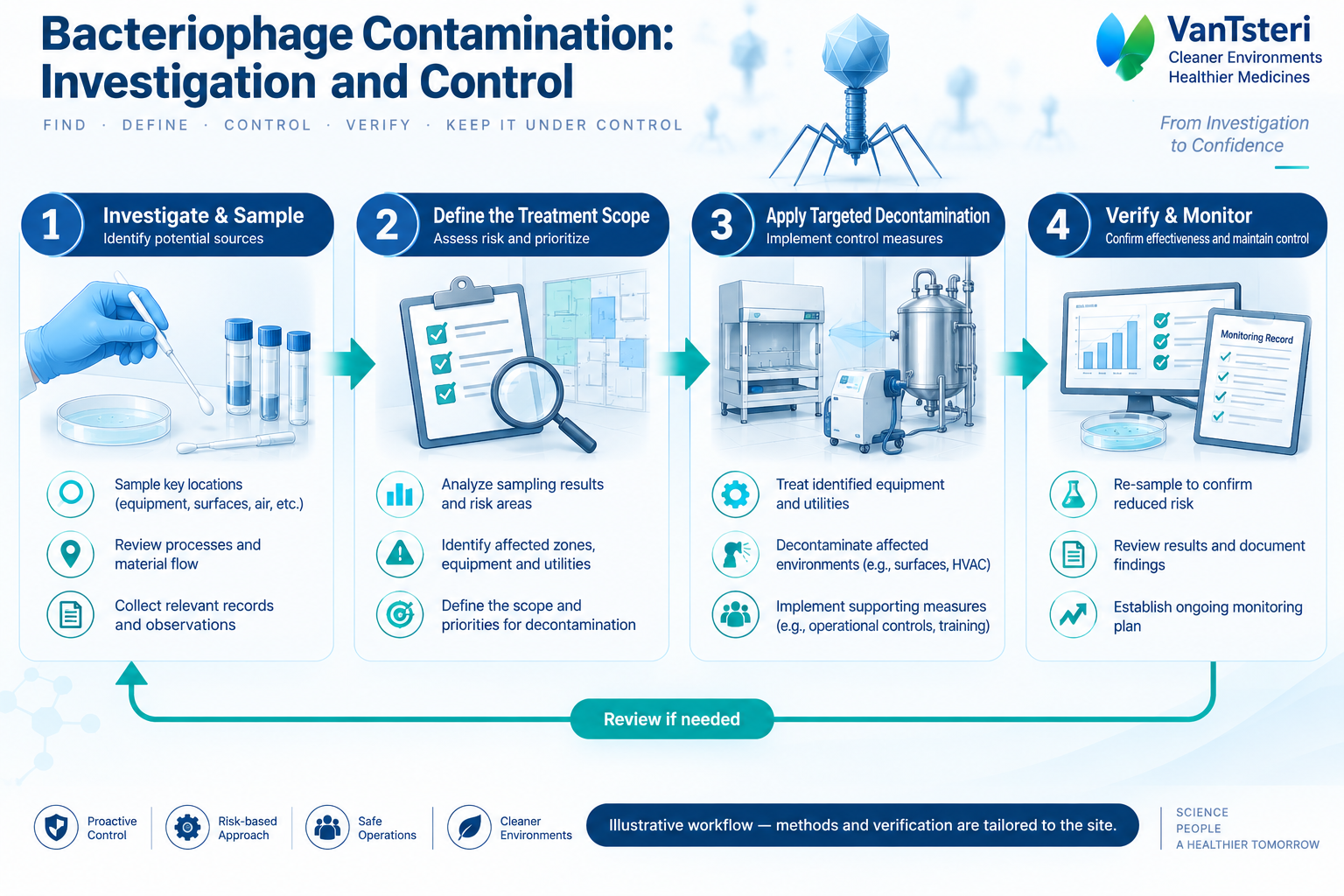
A connected service
- Investigate
- Review findings and records
- Define the scope
- Assess the relevant risks
- Respond
- Coordinate targeted treatment
- Review
- Evaluate outcomes in context
Reviewing results within their scope
Post-treatment findings and subsequent production observations need to be evaluated against the testing scope and site conditions. A single test result does not establish complete elimination or permanent prevention.
The source provides no identifiable single-project validation dataset. Evidence and outcomes should be evaluated within the scope of the relevant project.
VanTsteri’s value lies in connecting contamination investigation, a response to overlooked risks and outcome review, helping customers manage quality and production disruption with clearer evidence.