TECHNICAL SERVICE APPLICATION
HVAC VHP Decontamination
From system assessment to treatment verification.
Pharmaceutical HVAC systems are part of the production environment’s contamination-control strategy. Whether and how a system needs decontamination should be assessed against the actual system, its operating conditions and the evidence available. VanTsteri supports this process from system assessment to treatment verification.
Start with the system and the evidence
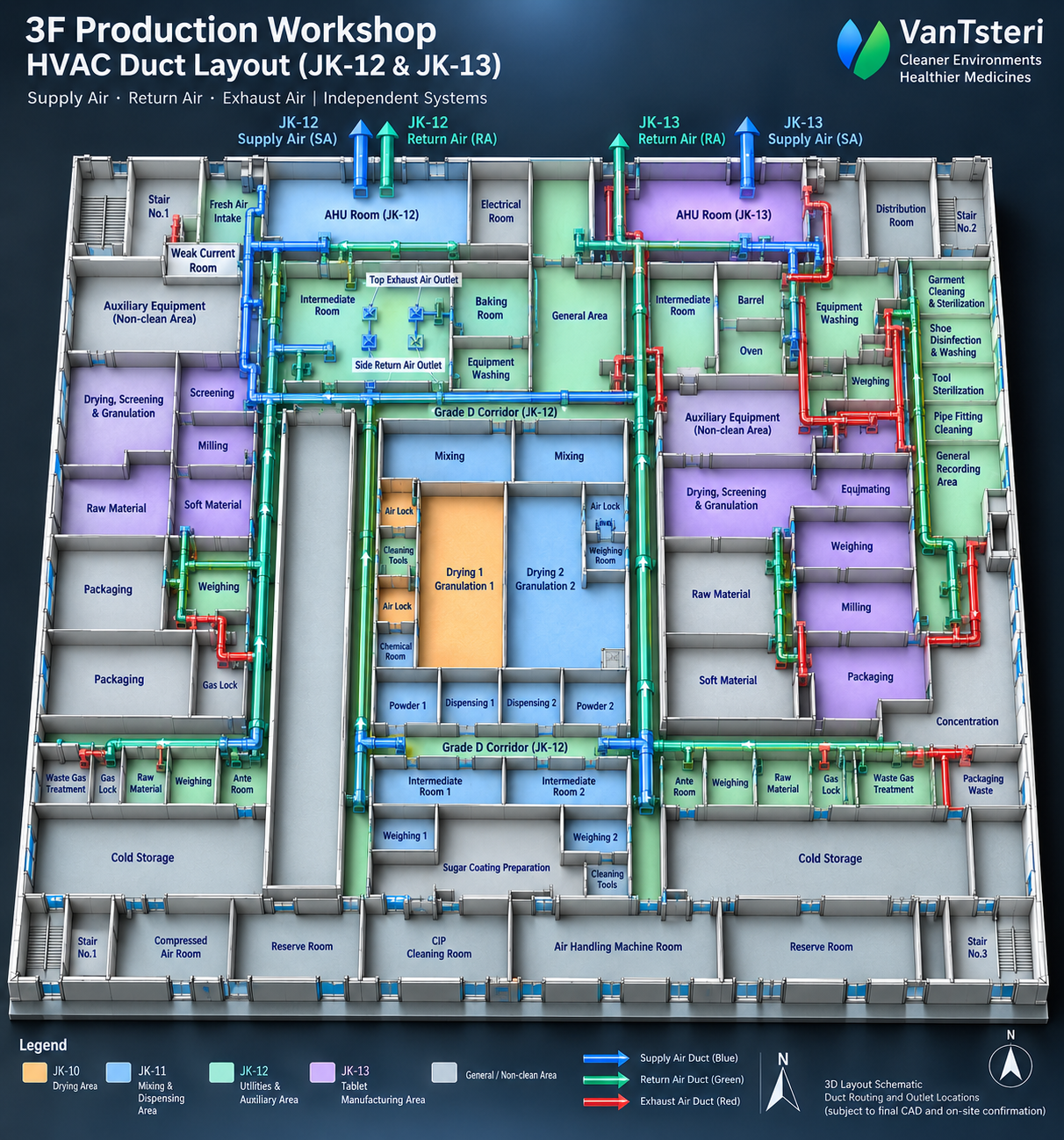
Assessment considers the air-handling unit, supply and return ducts, relevant exhaust paths and terminal components. Drawings, maintenance records, environmental monitoring trends and on-site observations help define the areas that need attention.
If abnormal microbial findings occur, the investigation should consider multiple possible sources and pathways. HVAC is a line of inquiry, not the assumed cause of every contamination event.
Address cleaning and defects separately from decontamination
Dust accumulation, standing water and system defects need their own assessment and corrective work. Decontamination does not replace cleaning or repair. The required work and its sequence should be defined for the site before a treatment plan is implemented.
Tailor VHP treatment to the HVAC system
VanTsteri has dedicated HVAC decontamination equipment and develops vaporized hydrogen peroxide (VHP) duct-treatment plans around the customer’s system structure, zones and operating conditions.
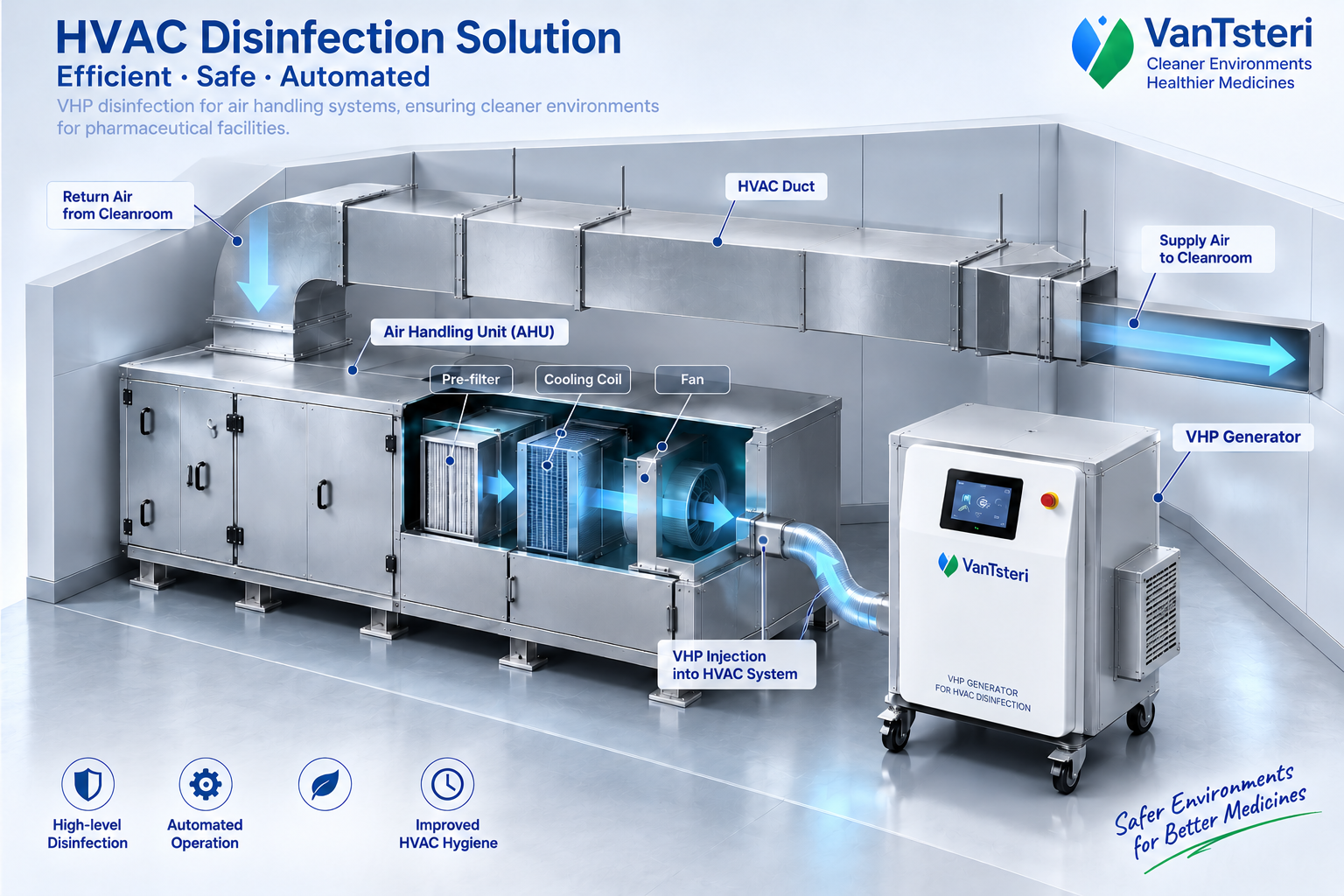
Equipment selection, connection arrangements and operating feasibility are assessed before implementation and verification.
Planning considers system zoning and isolation, whether treatment can reach the intended branches, material compatibility, residual-agent clearance, personnel safety and the conditions for returning the system to use.
Related equipment can be discussed as part of a site assessment. Linking a product does not mean that it is suitable for every HVAC configuration.
Define verification and keep the records
The treatment scope, relevant conditions and verification approach should be defined for the actual system. Records support evaluation of the work performed and its outcome within that scope.
Where necessary, assessment also considers filter integrity, airflow performance and the effect on the production environment. A treatment claim should not be extended beyond the conditions and evidence that support it.
Set maintenance frequency according to risk
A maintenance and contamination-control programme should reflect the system’s use, condition, monitoring results and relevant changes or events. There is no single six-month or annual decontamination interval that this article prescribes for all pharmaceutical HVAC systems.
Connect system assessment with on-site support
VanTsteri’s pharmaceutical weighing and sampling room case provides a related example of coordinating room treatment with the associated ventilation system. It does not establish a universal treatment schedule for other facilities.
If you need to assess your pharmaceutical HVAC system, discuss system investigation, equipment suitability, a tailored treatment plan and verification requirements with VanTsteri.
About this application article
This service application article draws on VanTsteri’s HVAC treatment discussion and guide commentary. It is not an account of a new customer project. Both images are illustrative; the equipment appearance, labels and routing do not establish a project’s equipment model, operating conditions, automation level or measured outcome.