Industries / 行业: Biological Laboratories

  • SPF Animal Facility Rotavirus Response

    From pathogen identification to environmental treatment and follow-up monitoring.

    Identifying the pathogen behind the concern

    An SPF research animal facility experienced diarrhoea in suckling mice and engaged VanTsteri to investigate and address the problem. The team collected faecal samples on site. Testing by a molecular laboratory identified murine rotavirus A, establishing the pathogen of concern for this project.

    Considering the environment and associated items

    Drawing on the faecal–oral and contact transmission pathways described by VanTsteri’s project representative, the project placed emphasis on both the associated environment and items.

    VanTsteri planned treatment of air, surfaces, HVAC systems and relevant equipment and utensils around the facility’s layout, with particular attention to areas that could be overlooked. The work used VanTsteri’s contamination-control technology and was coordinated with isolation management and testing.
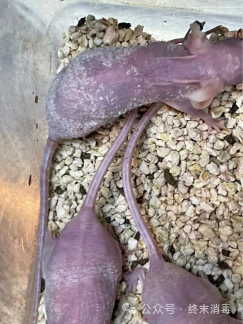
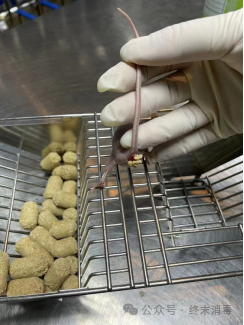
    Explore contamination investigation and source tracing

    Mice in an animal housing containerA gloved handler examining a mouse
    Case photographs supplied by VanTsteri. View photo 1 · View photo 2

    Project highlight: addressing environmental transmission risks

    The project used the identified pathogen and its transmission pathways to define the treatment scope. Related spaces, systems and items were considered together to reduce the risk of continued contamination through the environment and associated items.

    Following treatment with observation and testing

    According to the project record, the facility underwent one environmental treatment, followed by two weeks of isolation management. No further diarrhoea was observed during that period.

    Follow-up continued for four months, with environmental and suckling-mouse faecal testing conducted several times each month. Murine rotavirus A was not detected in those tests. These findings relate to this project’s observation period and testing scope.

    The value VanTsteri provided

    VanTsteri connected the investigation of diarrhoea and identification of the pathogen with environmental treatment, coordinated isolation management and follow-up testing. This provided a targeted response and observations and test results for evaluating the outcome.

    If your research animal facility is facing a similar contamination concern, discuss contamination investigation, facility environmental treatment and follow-up monitoring with VanTsteri.

    Discuss animal facility environmental decontamination

    Related decontamination options

    VanTsteri also provides vaporized hydrogen peroxide (VHP) equipment and environmental decontamination services for suitable applications. Suitability and treatment scope are assessed for each site. This related option is separate from the project account above, which does not identify its treatment technology.

    Explore VHP equipment

    Case information

    This anonymized case is based on VanTsteri’s project materials and information supplied by its project representative. The customer’s identity is withheld.
  • Research Animal Facility: Investigation and Environmental Response

    Project background

    VanTsteri's company account describes an infection incident at an anonymous SPF research animal facility covering approximately 2,000 m². The investigation considered animal housing, support spaces and the ventilation system.

    Investigation and response

    The source reports that an external identification service identified ticks found during the investigation. The response combined vector-control measures, changes to filtration and environmental decontamination using vaporized hydrogen peroxide. Chemical and spore biological indicators were used to evaluate the treatment.

    Company-reported outcome

    The account describes three days of treatment followed by a one-week closure before restart. It reports that subsequent observation found no further tick-associated transmission. The observation period and underlying test records are not specified.

    Scope of this account

    This is an anonymous company-reported project, distinct from the pre-operational 450 m² SPF facility case. It does not establish a measured log reduction, permanent protection or an animal-health guarantee.

  • Cell Laboratory Mold and Mycoplasma Response

    Connecting contamination investigation, equipment treatment and environmental control.

    When contamination keeps returning

    A cell culture laboratory at an unnamed medical school encountered recurrent mold contamination, disrupting cell preparation and research. The laboratory had already carried out routine equipment and environmental treatment, but mold returned during subsequent work. The team also suspected less visible mycoplasma contamination and sought VanTsteri’s support.

    Research laboratories may work with cells from different sources and involve varied personnel and working practices. These differences create cross-contamination risks that need to be assessed in context. They do not, by themselves, establish the source of contamination in this project.

    Explore contamination investigation

    Investigating equipment, environment and working practices

    VanTsteri began with a site investigation, combining environmental and equipment sampling with a review of working practices, ventilation and cleaning-tool management.

    The project account reports mold findings and mycoplasma in some samples. It also identifies contamination residues in equipment crevices, internal recesses and some laboratory glassware. These findings supported a response that brought equipment, the environment and daily management together.

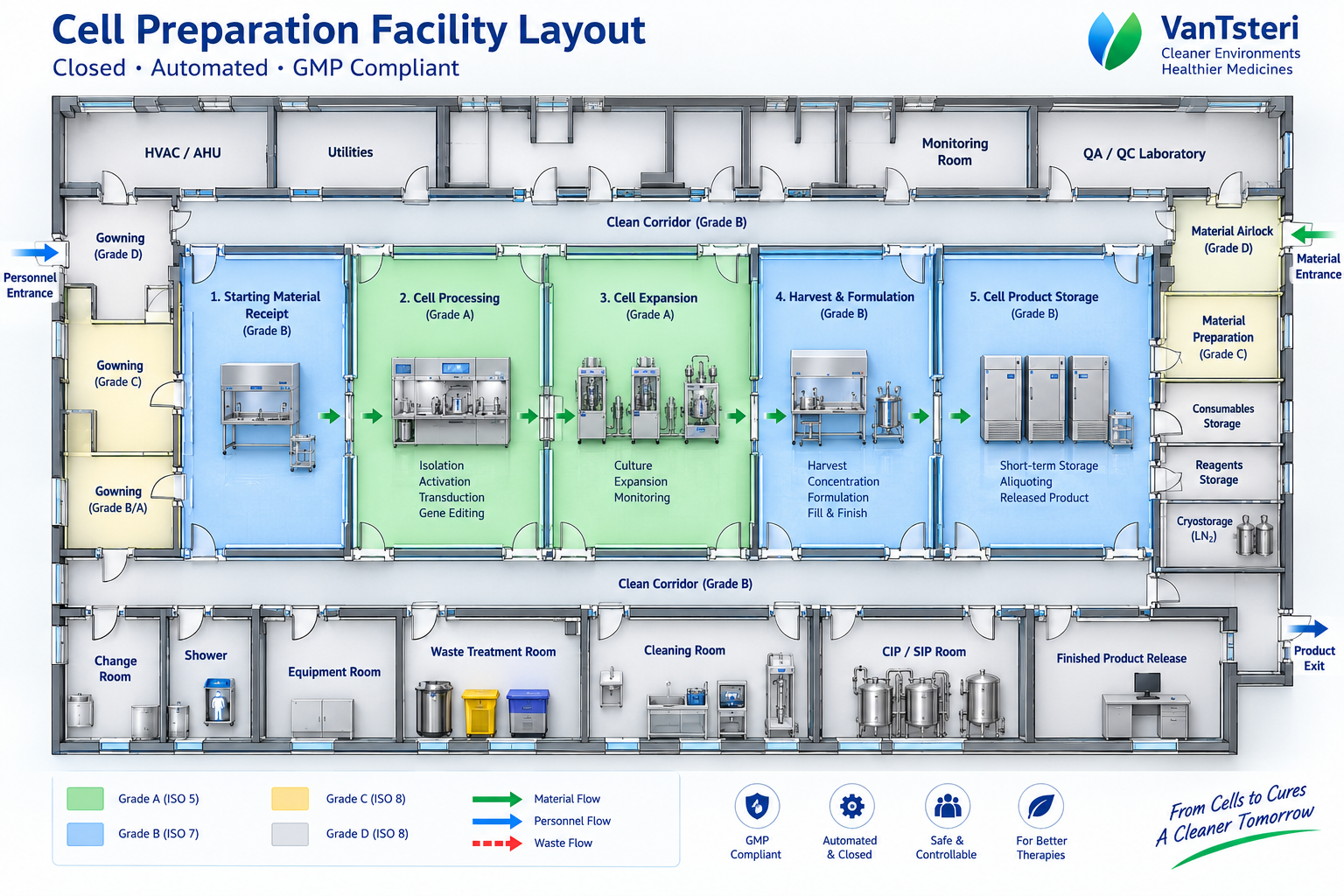
    Illustrative cell preparation facility layout showing functional areas, equipment and personnel and material flows
    Illustrative cell preparation facility layout. Grades and configurations shown do not identify this project’s actual facility.

    A coordinated scope

    Equipment
    Crevices and internal recesses
    Environment
    Laboratory space and ventilation
    Daily management
    Working practices, consumables and cleaning

    Translating findings into a targeted VHP response

    VanTsteri used vaporized hydrogen peroxide (VHP) to treat the relevant equipment and laboratory environment, and helped the laboratory review consumable preparation and cleaning practices. The treatment addressed equipment and the environment; it was not a treatment of live cells.

    The service connected the investigation findings with a site-specific response, followed by post-treatment sampling to assess the outcome.

    Separate technical evidence for mold and mycoplasma

    Independent tests provide additional evidence for KINO SE used with its accompanying hydrogen peroxide disinfectant. These equipment tests are separate from this laboratory’s post-treatment sampling and do not identify the equipment model used in this project.

    Black mold: hard-surface test

    Report 2024XDJ142 records killing log values greater than 3.00 for the tested black mold (Aspergillus niger) in each test under the specified conditions.

    View mold test evidence

    Mycoplasma: infectivity reduction

    Report PDC202501004 records a 5-log reduction in infectivity titer for the tested Mycoplasma hyorhinis. The finding demonstrates a reduction, not complete elimination.

    View mycoplasma test evidence

    The reported results apply to the tested equipment, disinfectant, organisms and conditions; they are not performance claims for every configuration or laboratory.

    Post-treatment findings and the return to research

    According to VanTsteri’s project account, the post-treatment samples tested did not detect mold, mycoplasma or the other microorganisms assessed. After work resumed, the account reports stable cell growth and no recurrence of the earlier contamination problem during the reported observation period.

    The project brought contamination investigation, targeted treatment and outcome review into one service response, helping the laboratory restore normal research work. The source does not state the duration of follow-up.

    Discuss laboratory decontamination

  • Stem Cell Storage: Mycoplasma Contamination and Robotic Support

    Connecting cell-recovery concerns with the storage environment and targeted service support.

    Contamination discovered during cell recovery

    A stem cell storage facility found contamination when cells were recovered. The company’s case account reports related microorganisms in the storage environment and identifies mycoplasma as the organism involved.

    Initial environmental treatment brought some areas closer to an acceptable condition, but contamination in the cold-storage area remained serious. The facility therefore sought support from VanTsteri.

    Assess the environment and connected facilities

    The project called for attention to the storage environment, surfaces and associated facilities. VanTsteri’s account highlights contamination investigation, treatment suitability for low-temperature areas and review of the ventilation and filtration system.

    Planning considers the microorganism involved, equipment and material compatibility, and residual-agent control. The approach is tailored to the storage facility and its requirements.

    Mobile robotic support across connected areas

    KINO PRO was used in this project. Its mobile capability supports planned tasks across connected corridors and areas in a larger storage facility. The movement path and task positions are assessed on site against the actual layout and service requirements.

    Concept illustration, not the actual project layout, dimensions or a validated treatment route. Animation speed controls affect the illustration only.
    Open the full-size robot illustration →

    Mobility with a defined scope

    Equipment applied
    KINO PRO mobile robot
    Connected areas
    Corridor movement supports planned tasks
    On-site assessment
    Review actual paths and task positions

    Explore KINO PRO →

    Material compatibility matters

    Storage facilities contain different materials, finishes and equipment components. KINO PRO’s third-party compatibility report evaluates five specified metal specimens under its test conditions. These results can inform a compatibility review; they do not guarantee corrosion-free performance for every material or facility component.

    Review PRO material compatibility evidence →

    Separate organism-specific technical evidence

    Related VHP technical evidence includes report PDC202501004 for KINO SE used with its accompanying hydrogen peroxide disinfectant. It reports a 5-log reduction in the infectivity titer of the tested Mycoplasma hyorhinis strain relative to the untreated control under the report’s conditions.

    This is independent KINO SE test evidence. It is not a measured result for the KINO PRO used in this storage project, and a reduction in infectivity titer is not a claim of complete elimination.

    Read the SE mycoplasma testing summary →

    Discuss your storage environment

    This case highlights the need to connect cell-recovery findings with the storage environment and facilities. VanTsteri can help assess the concern and develop a site-specific service scope. The published account does not provide a final project test result or follow-up outcome.

    Discuss stem cell storage decontamination →

  • PCR Laboratory Nucleic Acid Decontamination

    From environmental findings to coordinated treatment of the laboratory and HVAC systems.

    A specific contamination target

    A molecular biology laboratory identified environmental nucleic acid contamination and engaged VanTsteri to address it. The project needed to address nucleic acid contamination itself, beyond microbial inactivation alone. Both the treatment plan and the evaluation of its outcome therefore focused on nucleic acid decontamination.

    Following contamination findings beyond the workbench

    The investigation identified signs of nucleic acid contamination in air, on workbenches and near HEPA-filter outlets. These findings extended the treatment focus from working surfaces to the laboratory environment and its associated heating, ventilation and air-conditioning (HVAC) systems.

    Explore contamination investigation and source tracing

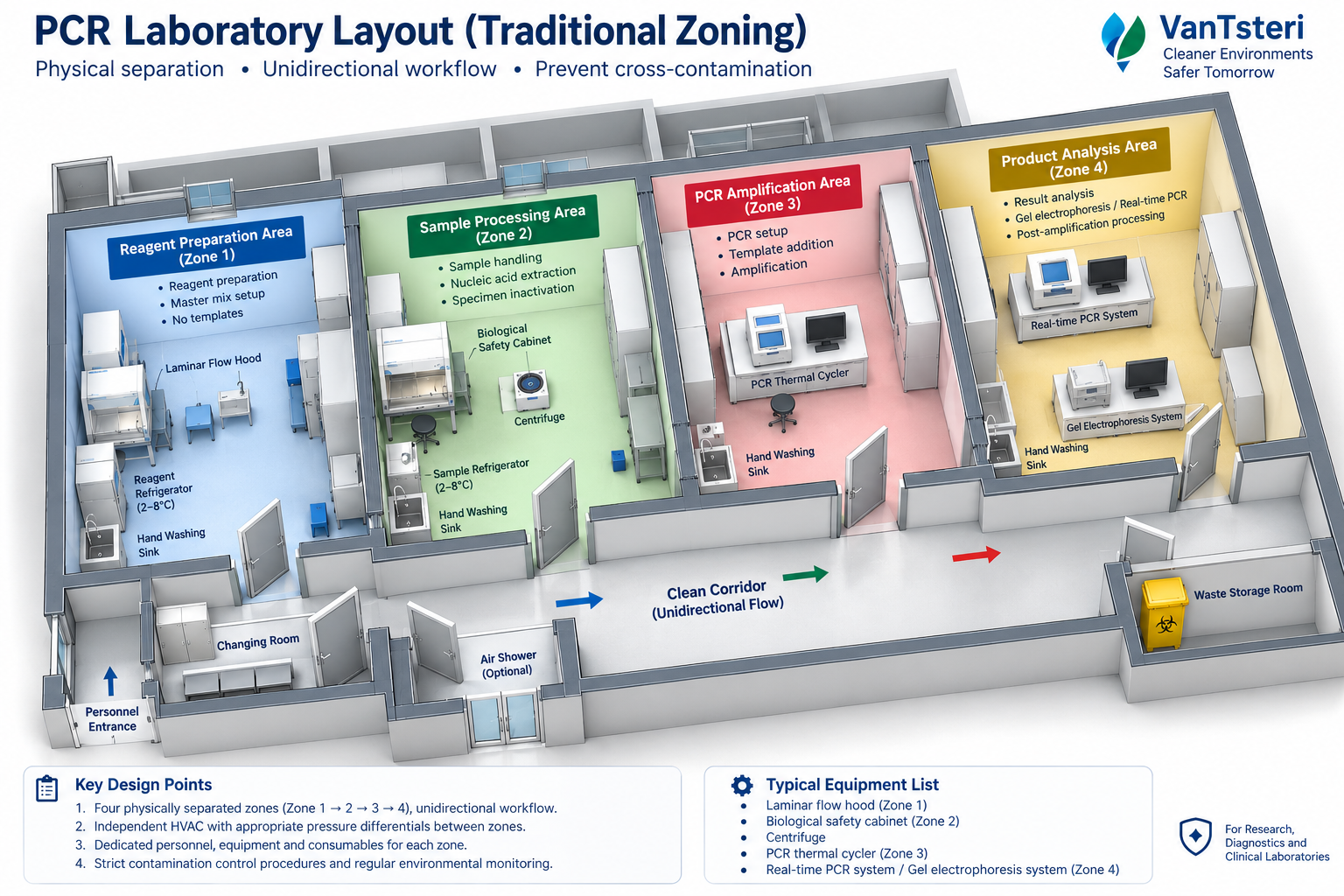
    PCR project layout illustration
    Project layout illustration, consistent with the site arrangement confirmed by VanTsteri’s project representative. View full-size illustration

    Treating the laboratory and HVAC systems together

    To address these findings, VanTsteri combined its own vaporized hydrogen peroxide (VHP) equipment with dedicated HVAC decontamination equipment in a coordinated treatment plan. The project covered a 300 m² laboratory and three HVAC systems, with a treatment period of five hours.

    VanTsteri’s decontamination technology can be used to address nucleic acid contamination. According to a VanTsteri representative, the technology’s nucleic-acid decontamination capability has undergone third-party verification, supporting its application. This case further illustrates its use in treating nucleic acid contamination in a laboratory and its HVAC systems.

    Explore VHP decontamination equipment

    Evaluating the outcome through nucleic acid testing

    According to the project record, all 120 environmental samples collected after treatment tested negative for the nucleic acid contamination under investigation. These findings relate to the samples tested in this project.

    The value VanTsteri provided

    The value of this case lies in connecting environmental findings, laboratory and HVAC treatment, and post-treatment nucleic acid testing around a specific contamination problem. This gave the customer a defined treatment scope and relevant test results for evaluating the outcome.

    If your PCR laboratory is facing nucleic acid contamination, discuss contamination investigation, laboratory and HVAC decontamination, and post-treatment testing with VanTsteri.

    Discuss PCR laboratory nucleic acid decontamination

    Case information

    This anonymized case is based on VanTsteri’s project record. The customer’s identity is withheld.
  • Biological Laboratory Disinfection

    案例详情设计预览 · 根据原英文案例整理 · 项目日期、图片归属与效果记录待核对
    Case Studies & Applications / Biological Laboratories

    Biological laboratories · Application overview

    Disinfection support for biological laboratory environments.

    Understand the service scope and connect your laboratory’s contamination concerns with investigation and on-site support.

    Biological laboratoriesIndustry
    Rooms & equipmentApplication context
    Application referenceContent type

    The supplied VanTsteri laboratory materials describe disinfection services adapted to different laboratory environments. This page introduces the service scope. Project details will be added as the case content is completed.

    When discussing a requirement, distinguish routine environmental disinfection from a response to a recurring contamination concern. The affected rooms, equipment, available findings and operational constraints help define the scope of the discussion.

    Understand the reported concern

    Review the client’s description of the issue, its history and the available environmental or laboratory findings. Where the source remains unclear, discuss contamination investigation as a related service.

    Define the relevant environment

    Discuss the rooms and equipment involved, access requirements and the boundaries of the proposed service. The scope should reflect the particular laboratory and its operating requirements.

    Agree on project records and review

    Before delivery, agree on the information the client needs to document the service and assess its outcome. Project results can be added alongside their supporting records.

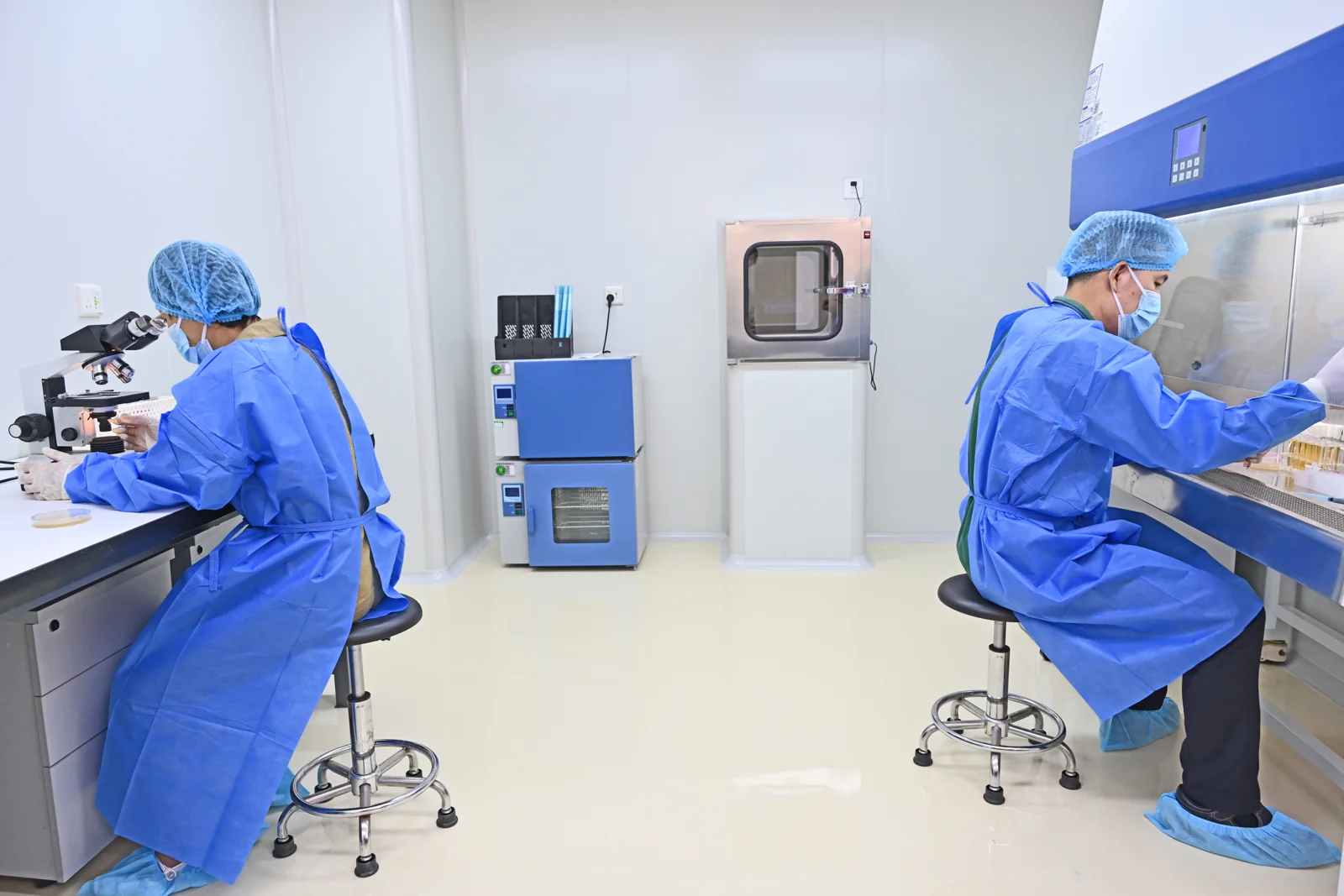
    Staff working in VanTsteri's microbiology laboratory
    VanTsteri’s own microbiology laboratory, supplied by the company. This is not a customer project photograph.

    Explore the laboratory introduction and the contamination investigation service to understand how they relate to your project enquiry.

    Explore Our Laboratory →

    Project outcomes

    Results achieved.

    Prepared from the supplied “Biological laboratory disinfection” website export and the company’s laboratory photographs. Project details and outcome text are awaiting entry.