Low-temperature VHP at −18°C, without warming the room or removing goods.
When repeated manual treatment did not control the problem
A pharmaceutical facility identified mold contamination in a cold room. According to the source account, the customer isolated potentially affected areas and made several attempts at manual spray treatment, but the contamination continued to spread. The production area had been shut down for approximately two weeks before VanTsteri became involved.
Using identification and distribution to guide treatment
VanTsteri worked with the customer to investigate the distribution of contamination and submitted mold samples to a testing organization for molecular identification. The samples were identified as Penicillium. The identified organism and its distribution helped define the treatment priorities.
Explore contamination investigation
Project highlight: treating in place at −18°C
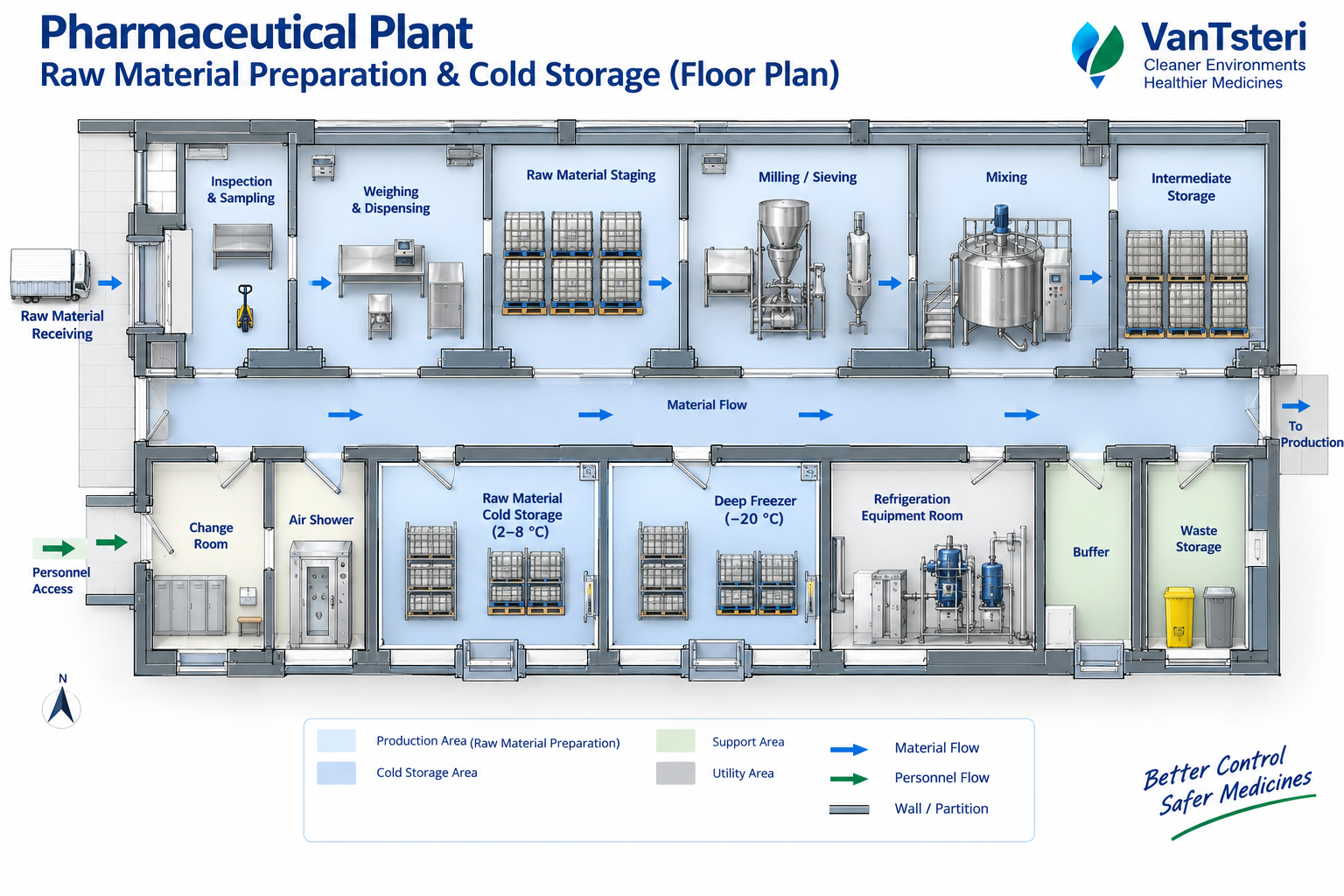
For this project, the cold room had to remain at −18°C, with goods left in place. VanTsteri used its low-temperature vaporized hydrogen peroxide (VHP) technology to carry out in-situ decontamination under the site’s cold-storage conditions, without warming the room or clearing out the stored goods.
This approach avoided the need to first move the goods and adjust the cold-room temperature as part of the treatment arrangements.
Low-temperature technical support
VanTsteri holds documentation of surface-disinfection testing at −18°C under specified conditions. These records provide a reference for low-temperature capability; the on-site mold-control outcome in this project is assessed separately. The related equipment page presents the historical test conditions and their limits.
Explore low-temperature VHP equipment
Project outcome and continued service
According to VanTsteri’s project representative, the mold contamination problem in the treated area was resolved. During subsequent contact and service visits, the customer did not report a return of the previous mold problem in the same area. The customer continued to commission VanTsteri’s decontamination services.
These are project-representative reports and customer feedback, rather than a claim of laboratory non-detection, a specified follow-up duration or permanent prevention.
The value VanTsteri provided
The project combined contamination investigation, low-temperature VHP technology and the site’s storage constraints. It provides an example of in-place treatment for a cold room that could not be warmed, while leaving stored goods in place.
If your pharmaceutical cold room is experiencing mold contamination, discuss contamination investigation, low-temperature VHP equipment and a site-specific treatment plan with VanTsteri.
Discuss cold-room mold treatment
Case information
This anonymized case is based on VanTsteri’s source materials and information confirmed by its project representative. The customer’s identity is withheld.